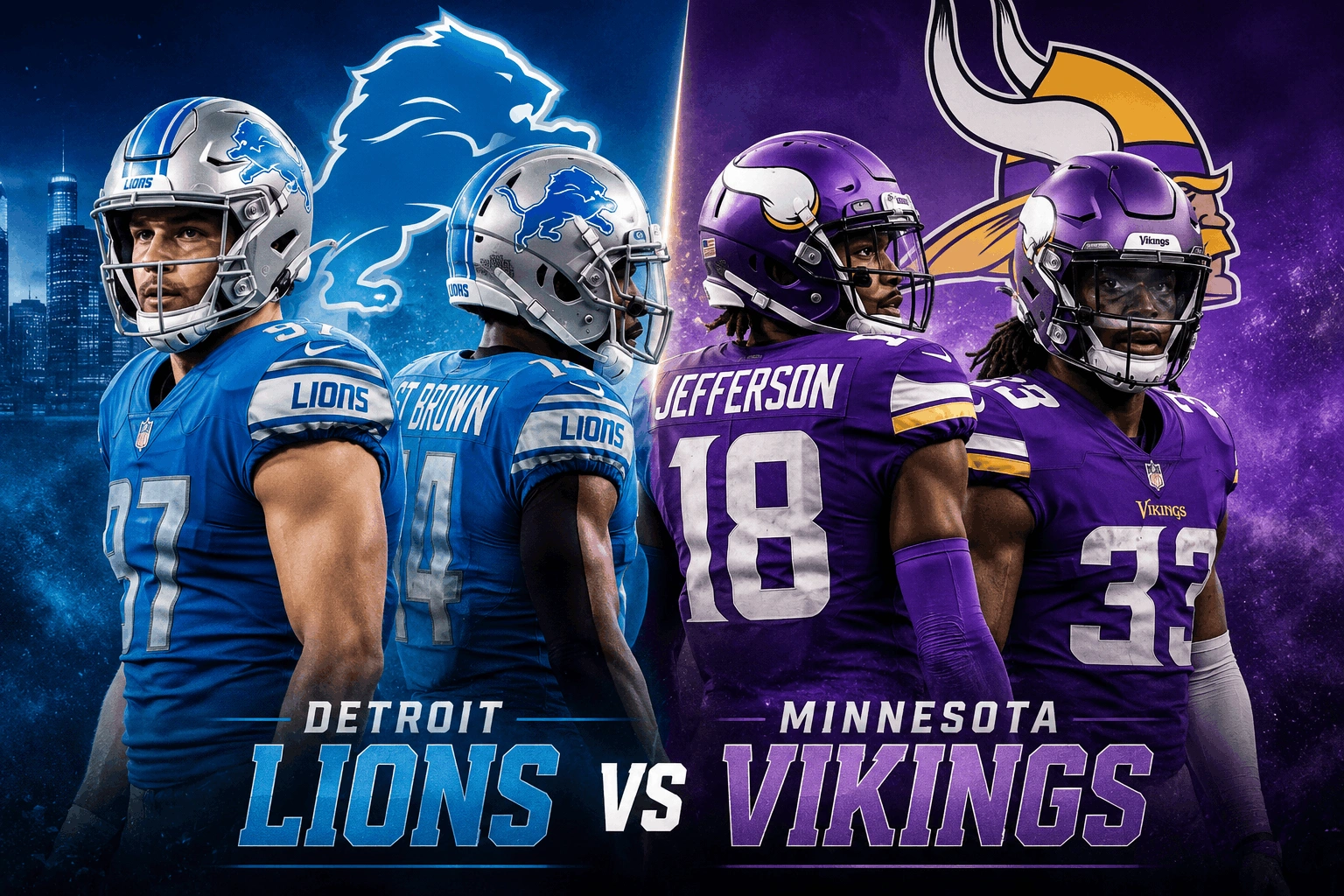
Detroit Lions vs Minnesota Vikings Match Player Stats
The rivalry behind the Detroit Lions vs Minnesota Vikings Match Player Stats has become one of the most fascinating storylines in the NFC North. Every meeting between these two franchises brings explosive offense, tactical defensive adjustments, and standout individual performances that often shape the playoff picture. Fans do not just watch these games for the final score. They closely analyze quarterback efficiency, rushing production, receiving yards, defensive pressure, turnovers, and situational execution.
Over the last few seasons, both teams have evolved into highly competitive rosters with elite offensive weapons and improving defensive units. The Lions have developed into a physical and aggressive team under their modern system, while the Vikings continue to rely on dynamic playmakers capable of changing games instantly. Looking closely at player statistics reveals why these matchups consistently produce drama, momentum swings, and memorable performances.
This detailed breakdown explores the most important player stats, tactical trends, standout performers, and game changing moments from recent contests between Detroit and Minnesota. Whether you are a fantasy football enthusiast, a sports bettor, or simply an NFL fan looking for deeper analysis, this guide provides the insights that matter most.
Detroit Lions vs Minnesota Vikings Match Player Stats Breakdown
One reason these divisional games attract so much attention is the contrast in playing styles. Detroit often emphasizes balance and physicality, while Minnesota frequently leans on explosive passing attacks and quick offensive tempo.
When evaluating player stats from these meetings, several categories consistently determine the outcome:
Key Statistical Areas
Quarterback Efficiency
Quarterback performance is usually the biggest deciding factor in these games. Completion percentage, touchdown passes, interception ratio, and third down conversion efficiency often separate the winner from the loser.
Rushing Production
Running backs and offensive line execution heavily influence time of possession. Teams that establish the run typically control momentum and reduce defensive pressure.
Receiver Matchups
Wide receiver statistics against opposing secondaries reveal where advantages exist. Big plays downfield frequently shift game momentum quickly.
Defensive Pressure
Sacks, quarterback hits, and pressures often disrupt offensive rhythm. Defensive fronts from both teams have produced impactful performances in critical situations.
Turnover Margin
Interceptions and forced fumbles remain among the strongest indicators of success in NFC North divisional games.
Quarterback Performances That Defined the Rivalry
Quarterback play remains central when discussing recent contests between these franchises. Statistical comparisons between signal callers often tell the entire story of the matchup.
Detroit Lions Quarterback Production
Detroit’s offensive structure has emphasized efficiency, timing routes, and red zone execution. Strong quarterback performances against Minnesota have typically included:
- High completion percentages
- Controlled passing tempo
- Effective play action execution
- Limited turnovers
- Red zone touchdown efficiency
The Lions have consistently attacked intermediate zones in the Vikings defense, particularly when linebackers struggle in pass coverage. Accurate throws over the middle and effective protection schemes have allowed Detroit quarterbacks to maintain rhythm.
In several recent meetings, Detroit quarterbacks surpassed:
- 250 plus passing yards
- Multiple touchdown passes
- Passer ratings above league average
- Strong third down conversion numbers
The offensive line deserves significant credit here. Protection consistency often gives Detroit enough time to exploit defensive mismatches.
Minnesota Vikings Quarterback Production
Minnesota traditionally relies on aggressive passing concepts and vertical route combinations. Vikings quarterbacks have produced impressive statistical performances when given clean pockets.
Important quarterback strengths for Minnesota include:
- Deep passing accuracy
- Quick release timing
- Explosive play generation
- Strong chemistry with elite receivers
However, Detroit’s improving pass rush has occasionally forced rushed decisions and disrupted Minnesota’s offensive timing. When pressured consistently, Vikings quarterbacks have sometimes struggled with turnovers and stalled drives.
Even so, Minnesota quarterbacks frequently generate:
- High passing yard totals
- Multiple explosive completions
- Strong red zone passing efficiency
- Competitive fourth quarter performances
These quarterback duels are often among the most entertaining parts of the rivalry.
Running Back Statistics and Ground Game Impact
Rushing production often becomes overlooked in modern NFL analysis, but it remains essential in divisional matchups where weather conditions and physicality matter.
Detroit Lions Rushing Attack
Detroit has built a reputation for physical football. Their rushing offense frequently controls tempo and creates favorable passing situations.
Key rushing stats typically include:
- Yards after contact
- Red zone rushing touchdowns
- First down conversions
- Average yards per carry
- Time of possession contribution
The Lions offensive line has consistently ranked among the stronger run blocking units in football. This physicality allows Detroit running backs to wear down defenses during second halves.
In successful performances against Minnesota, Detroit runners often exceed:
- 100 combined rushing yards
- Multiple explosive runs
- Strong goal line efficiency
This balance prevents defenses from focusing exclusively on pass coverage.
Minnesota Vikings Rushing Strategy
Minnesota’s ground attack has varied depending on personnel and coaching philosophy. At their best, the Vikings use rushing efficiency to support play action opportunities.
Important rushing statistics include:
- Explosive outside runs
- Receiving yards from running backs
- Screen game efficiency
- Third down rushing success
Against Detroit, Minnesota sometimes struggles when forced into predictable passing situations. When the Vikings maintain rushing balance, their offense becomes significantly more dangerous.
Wide Receiver and Tight End Matchups
Skill position battles are among the most exciting aspects of these games. Elite receivers from both sides regularly produce highlight worthy performances.
Detroit Lions Receiving Leaders
Detroit’s receiving corps has evolved into a versatile unit capable of attacking every area of the field.
Important receiving metrics include:
- Yards after catch
- Red zone targets
- Explosive receptions
- Third down conversion catches
- Target share consistency
The Lions often use creative formations to generate favorable matchups against Minnesota’s secondary. Slot receivers and tight ends frequently become major contributors.
Strong receiving performances usually feature:
- Multiple receptions over 20 yards
- Efficient red zone production
- High catch percentages
- Reliable chain moving plays
Detroit’s offensive versatility forces defenses to defend horizontally and vertically.
Minnesota Vikings Receiving Threats
Minnesota consistently fields one of the league’s most dangerous receiving groups. Their ability to stretch defenses creates constant pressure on opposing secondaries.
Critical receiving statistics include:
- Deep target efficiency
- Contested catch success
- Separation metrics
- Touchdown production
- Yards per route run
The Vikings excel when receivers create explosive plays early in games. Detroit’s defense must limit big gains and tackle effectively after completions.
In standout performances, Minnesota receivers often produce:
- 100 plus receiving yards
- Long touchdown receptions
- High yards per catch averages
- Dominant red zone production
Few teams can match Minnesota’s explosive receiving ceiling when execution is sharp.
Defensive Player Stats and Impact
Offensive production receives most headlines, but defensive performances often determine divisional winners.
Detroit Lions Defensive Strengths
Detroit’s defense has improved significantly through aggressive schemes and better personnel development.
Important defensive stats include:
- Quarterback pressures
- Tackles for loss
- Red zone stops
- Forced turnovers
- Third down defensive efficiency
The Lions defensive front frequently creates problems for Minnesota’s offensive line. Edge pressure and interior disruption force quarterbacks into uncomfortable situations.
Key defensive contributors often impact games through:
- Timely sacks
- Pass breakups
- Run stopping consistency
- Momentum changing turnovers
Detroit’s defensive identity revolves around physicality and relentless effort.
Minnesota Vikings Defensive Adjustments
Minnesota has historically relied on disguise coverages and creative blitz packages to pressure opponents.
Key defensive categories include:
- Blitz pressure rates
- Interceptions
- Coverage success
- Defensive touchdowns
- Goal line stops
When Minnesota’s defense executes effectively, it forces offenses into long third down situations and limits explosive plays.
Against Detroit, the Vikings must contain:
- Play action passing
- Screen passes
- Red zone rushing attacks
- Tight end production
Defensive discipline becomes critical because Detroit’s offense capitalizes on mistakes quickly.
Recent Statistical Trends Between Both Teams
Several consistent trends have emerged in recent meetings.
High Scoring Tendencies
Many recent games between these franchises have featured:
- Fast offensive starts
- Multiple lead changes
- Strong second half scoring
- Explosive passing plays
Modern offensive systems and aggressive play calling contribute to elevated scoring totals.
Importance of Third Down Efficiency
Third down conversion percentage frequently predicts the winner. Sustained drives:
- Wear down defenses
- Improve field position
- Increase scoring opportunities
- Control momentum
Teams converting above 45 percent on third down often gain a major advantage.
Red Zone Execution
Field goals rarely win these matchups consistently. Touchdown efficiency inside the 20 yard line remains essential.
Winning teams usually demonstrate:
- Better goal line play calling
- Cleaner execution
- Lower turnover rates
- Stronger offensive line performance
Most Memorable Individual Performances
Several players have delivered exceptional statistical performances in this rivalry.
Elite Quarterback Games
Certain contests featured:
- 300 plus passing yards
- Four touchdown performances
- Late game winning drives
- Remarkable completion percentages
These moments often become defining highlights of NFL seasons.
Dominant Receiver Showcases
Wide receivers have produced:
- Multiple touchdown games
- Explosive deep catches
- Clutch fourth quarter receptions
- Record setting yardage totals
The rivalry consistently showcases elite receiving talent.
Defensive Game Changers
Defenders have also created unforgettable moments through:
- Strip sacks
- Interceptions returned for touchdowns
- Goal line stands
- Game sealing pressures
Big defensive plays frequently shift momentum instantly.
Coaching Strategies Behind the Numbers
Statistics only tell part of the story. Coaching decisions heavily influence player production.
Detroit’s Tactical Approach
Detroit often emphasizes:
- Physical offensive line play
- Balanced offensive attack
- Aggressive fourth down decisions
- Defensive pressure packages
This philosophy creates consistent offensive opportunities and keeps pressure on opponents.
Minnesota’s Strategic Identity
Minnesota frequently focuses on:
- Vertical passing concepts
- Motion based formations
- Defensive disguise schemes
- Tempo changes
The Vikings aim to create confusion and exploit defensive mismatches quickly.
Fantasy Football Insights From These Matchups
Fantasy football managers closely monitor this rivalry because offensive production is often strong.
Reliable Fantasy Contributors
Common fantasy standouts include:
- Starting quarterbacks
- WR1 options
- Pass catching running backs
- Red zone tight ends
These games frequently generate fantasy relevant scoring opportunities.
Defensive Streaming Considerations
Fantasy managers should evaluate:
- Sack potential
- Turnover trends
- Injury reports
- Offensive line matchups
Pressure rates can significantly influence fantasy defensive value.
Advanced Analytics and Hidden Trends
Modern football analysis extends beyond traditional box score statistics.
Expected Points Added
Expected Points Added metrics often reveal:
- Efficiency under pressure
- Situational offensive success
- Impact of explosive plays
- Red zone effectiveness
These advanced numbers help explain why some teams outperform raw yardage totals.
Pressure Versus Blitz Success
One fascinating trend involves pressure generation without excessive blitzing. Teams generating pressure with four rushers usually gain major defensive advantages.
Explosive Play Differential
Games are frequently decided by:
- Passes over 20 yards
- Long rushing attempts
- Broken tackles
- Missed assignments
Explosive play differential remains one of the strongest predictive indicators.
How Injuries Influence Player Statistics
NFL player statistics never exist in isolation. Injuries heavily influence production and outcomes.
Offensive Line Injuries
Missing linemen affect:
- Quarterback pressure rates
- Rushing efficiency
- Time of possession
- Red zone consistency
Even one missing starter can dramatically shift offensive performance.
Secondary Injuries
Defensive back injuries often lead to:
- Increased passing yards allowed
- More explosive completions
- Higher touchdown rates
- Reduced coverage flexibility
These issues become especially problematic against elite receiving groups.
Comparing Offensive Philosophies
Detroit and Minnesota approach offensive football differently, which creates fascinating statistical contrasts.
Detroit’s Balanced System
Detroit prefers:
- Ball control
- Efficient passing
- Physical rushing
- Offensive line dominance
This style creates sustainable offensive production.
Minnesota’s Explosive Style
Minnesota emphasizes:
- Vertical passing
- Receiver isolation
- Tempo shifts
- Big play generation
This creates higher variance but tremendous scoring upside.
Historical Context of the Rivalry
The rivalry between these NFC North teams extends across decades of competitive football.
Historically, these matchups feature:
- Physical defensive battles
- Emotional divisional intensity
- Playoff implications
- Momentum shifting performances
Statistical trends evolve over time, but competitiveness remains constant.
What Fans Should Watch in Future Matchups
Future games between Detroit and Minnesota will likely continue showcasing elite offensive talent and aggressive coaching decisions.
Key factors to monitor include:
- Quarterback consistency under pressure
- Red zone touchdown efficiency
- Turnover margin
- Defensive adaptability
- Offensive line performance
The team that controls these areas usually gains the upper hand.
Why Player Stats Matter More Than Final Scores
Casual fans often focus only on wins and losses, but deeper statistical analysis provides a clearer understanding of team quality.
Player statistics reveal:
- Sustainability of success
- Individual growth
- Coaching effectiveness
- Tactical strengths and weaknesses
This information helps analysts, fantasy managers, bettors, and dedicated fans make smarter evaluations.
The Evolution of NFC North Competition
The NFC North has become increasingly competitive due to offensive innovation and improved roster construction.
Detroit’s rise has intensified divisional competition, while Minnesota continues adapting through modern offensive concepts.
As analytics become more influential, teams increasingly use:
- Motion based offense
- Data driven decision making
- Situational efficiency analysis
- Matchup specific game planning
This evolution makes future statistical comparisons even more interesting.
Trusted Data Sources for NFL Statistics
Reliable football analysis depends on trustworthy statistical databases and official reporting. Many analysts rely on official league data from the National Football League for verified player performance metrics, injury updates, and historical records.
For your own website, internal linking opportunities may include:
- NFC North power rankings
- Weekly fantasy football projections
- NFL injury analysis articles
- Team specific season previews
- Quarterback comparison guides
You might also like Seahawks vs Detroit Lions Match
Frequently Asked Questions
Why are Detroit vs Minnesota games usually high scoring?
Both teams possess explosive offensive weapons and aggressive play calling styles. Defensive schemes also prioritize pressure, which can create big play opportunities.
Which player stats matter most in these matchups?
Quarterback efficiency, turnover margin, third down conversions, rushing success, and explosive passing plays are usually the most influential factors.
Are these games important for playoff positioning?
Yes. NFC North divisional games often have major playoff implications because division standings are extremely competitive.
Which team has the stronger offense recently?
Both teams have produced strong offensive numbers, but effectiveness varies based on injuries, quarterback play, and offensive line health.
Why do fantasy football managers target these games?
These matchups frequently produce high yardage totals, touchdowns, and pass heavy game scripts that benefit fantasy scoring.
How important is defense in this rivalry?
Defense remains critical. Timely sacks, interceptions, and red zone stops often determine close games.
Conclusion
The story behind the Detroit Lions vs Minnesota Vikings Match Player Stats goes far beyond touchdowns and final scores. These matchups showcase evolving offensive systems, elite skill position talent, aggressive coaching philosophies, and critical defensive adjustments that shape the NFC North landscape.
Statistical analysis reveals why these games remain so compelling. Quarterback efficiency, explosive receiving production, rushing balance, defensive pressure, and turnover margin consistently influence outcomes. Fans who study these numbers gain a deeper understanding of how and why momentum shifts occur throughout each contest.
As both franchises continue building competitive rosters, future meetings should deliver even more fascinating performances and statistical storylines. For football fans seeking meaningful analysis instead of surface level commentary, studying player stats provides the clearest window into what truly decides these games.